3 harness vendor moves from this week that flip your Q2 budget math
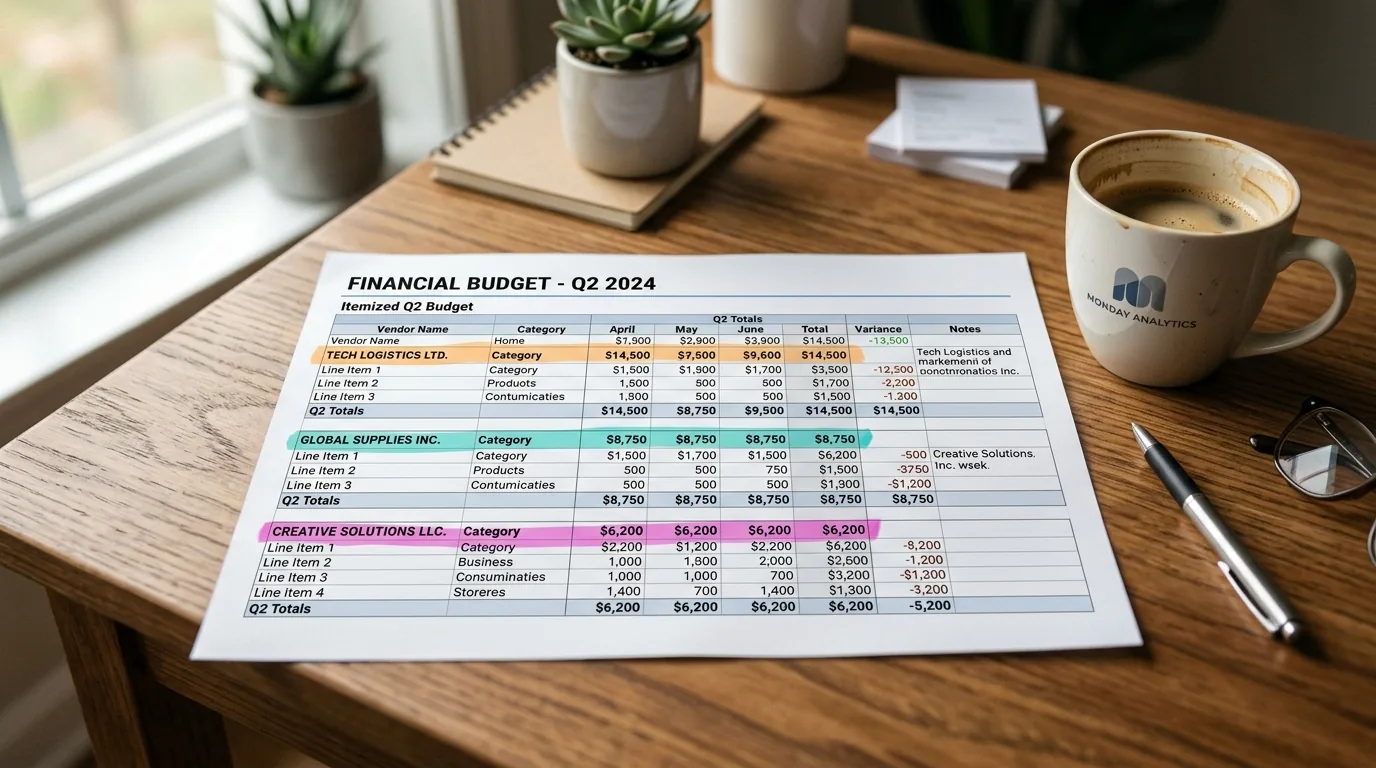
In 72 hours Microsoft swapped Copilot's base model, Cursor shipped its own coding model at one-tenth the per-token price of frontier models, and Google walked into I/O 2026 with an agent-first IDE already free. The Q2 budget line just got decoupled from what your engineers run.
In 72 hours this week Microsoft swapped Copilot's base model under every Business and Enterprise tenant, Cursor shipped its own coding model at one-tenth the per-token price of frontier models, and Google walked into I/O 2026 with an agent-first IDE already free. The Q2 renewal conversation just stopped being which harness you standardize on and started being which vendor gets to swap the model under your CI without asking.
I had a Friday call with a CTO this week who asked what he was supposed to put on the Monday board slide. Three of his vendors had moved on him by Tuesday. His Q2 budget number was already wrong, and he had four working days to figure out by how much.
Here is what happened.
This week’s signals
1. GitHub flipped Copilot’s base model on every Business and Enterprise tenant. May 17.
GitHub’s official changelog confirms it. GPT-5.3-Codex is now the base model for all Copilot Business and Copilot Enterprise organizations, replacing GPT-4.1. The 60-day timer started on March 18, so every admin had nine weeks of notice. Activation runs at a 1x premium-request multiplier, which means the per-engineer cost line on the seat invoice looks identical to last month. Every quality, latency, and security characteristic of the code those engineers shipped on Monday is different from the code they shipped on Friday. Same line item, different product.
Then on May 18, GitHub added one-click “Fix with Copilot” on failing Actions runs. The Copilot cloud agent now pushes a fix to the branch and tags the developer for review. That ties the model swap directly to merged code, not just to suggestions in the editor.
2. Cursor shipped Composer 2.5 and stopped being only a harness. May 18.
Cursor released its own coding model the same week. It is built on Moonshot’s open-source Kimi K2.5 checkpoint, trained on 25x more synthetic tasks than Composer 2, with 85 percent of the compute budget spent on reinforcement learning and behavioral calibration. As The Decoder reported on May 18:
"Composer 2.5 matches Opus 4.7 and GPT-5.5 on benchmarks like SWE-Bench Multilingual (79.8 percent) and CursorBench v3.1 (63.2 percent), while costing $0.50 per million input tokens and $2.50 per million output tokens, a fraction of what Anthropic and OpenAI charge."
The numbers worth carrying into a board meeting are the benchmark match and the per-token price. The “up to 10x cheaper” framing is Cursor’s own positioning and compares standard-tier Composer 2.5 to fast-tier frontier models, so it is a vendor metric, not an independent finding. The structural point is that Cursor is now a harness and a model vendor at the same time. Two profit pools, one admin tenant.
3. Google walked into I/O 2026 with Antigravity already free. May 19.
The Google I/O 2026 keynote runs today. Antigravity, Google’s agent-first IDE, is already in free public preview with full Gemini 3 Pro access and no announced usage caps. Whatever Gemini 4 ends up being when the keynote ends, the strategic move is already on the field. Google is giving the IDE and the model away to acquire the developer workflow before anyone else can charge for it.
The thread connecting them
Three independent vendors converged on the same week. The shared move is owning the model layer and flipping defaults at the admin tenant, not at the developer seat.
GitHub did it by masking the cost. Same multiplier, different model. Cursor did it by resetting the cost. Own house model, one-tenth the per-token price of Opus or GPT-5.5 on the standard tier. Google did it by zeroing the cost. Free IDE, free Gemini access, acquire the developer before the seat ever shows up on a procurement sheet. Three pricing strategies, one structural play, same week.
The seat line on your Q2 renewal slide is now decoupled from what your engineers actually run. The vendor controls the model, the model controls the cost, and the swap happens on a Tuesday morning while procurement is closing tickets.
Segment lens
For the CEO or founder. A harness budget needs three sub-lines next quarter that did not exist on the April slide. A model-spend pool, variable, that can grow 20 percent in a week when a vendor flips defaults. A governance plane line, named (Microsoft Agent 365, the GitHub admin tenant, or the equivalent in whatever stack the org actually runs). And a reflex authority line: the name of the human inside the company with the right to pull the trigger when a vendor changes a default on a Tuesday. Without the third one, the first two drift on autopilot.
For the CTO or VP Eng. The base-model flip happened with 60 days of notice and most engineering orgs did not run a regression test on day 61. That is the operational gap to close before June. The pattern from this week is that harness vendors will keep moving faster than the typical review cadence, and the real question is whether someone on the team owns “what changed in the stack this week and what did our output look like after” as a named job, or whether it lives in everyone’s inbox and nobody’s calendar.
One thing to do
Pick a single recurring meeting next week (any meeting, even a 1:1) and add one agenda line: “what changed in our harness or model stack this week, and what did the output look like after.” Run it for four weeks. The slide that meeting produces is the Q2 budget conversation a board actually needs, and it costs fifteen minutes a week to start.
Sources
- GPT-5.3-Codex is now the base model for Copilot Business and Enterprise - GitHub Changelog, 2026-05-17
- One-click fixes for failing Actions with Copilot cloud agent - GitHub Changelog, 2026-05-18
- Introducing Composer 2.5 - Cursor Blog, 2026-05-18
- Cursor's Composer 2.5 matches Opus 4.7 and GPT-5.5 benchmarks at a fraction of the cost - The Decoder, 2026-05-18
- Google I/O 2026: Build next-gen AI experiences with Google AI Studio and Google Antigravity - Google I/O 2026 session page, 2026-05-19
Written by Kinan Hamwi, Founder of Cerevisor.