The harness adoption myth Anthropic, IBM, and Dell quietly retired this week
Three vendor stages told the executive room this week that the harness adoption bottleneck is not developer training, it is operations. Here is the myth, the McKinsey number that breaks it, and what to put on the next rollout slide.
I keep getting the same question from CEOs this month. It goes something like, “We bought the seats, the engineers are using it, why hasn’t anything shipped at scale yet?” The framing inside the question is the myth.
This week Anthropic, IBM, Dell, Freshworks, and SailPoint all stood on different stages and told the executive room the same thing: harness adoption is no longer a developer-training problem. It is an operations and control-plane problem. McKinsey already put a number on the failure mode. Two-thirds of AI pilots stall before reaching production scale, and the missing piece is not better onboarding decks.
The myth
The myth sounds like this in a leadership meeting. “Our coding-agent rollout needs more developer education. The seats are deployed, the senior engineers are using it, juniors will catch up once we run another round of brown-bags. Then the productivity number moves.”
It is the same myth dressed in different clothes. The bottleneck is the developer. The fix is more training. The board number arrives once everyone is fluent. That story made sense in 2024 when autocomplete was the frontier. Two years later it is the wrong story, and I think most leadership teams I talk to know it but cannot quite name what replaces it.
Why it sounds right
It sounds right because every adoption framework most leaders learned was built for SaaS. SaaS adoption really is about user education. People plus training plus a champion equals rollout. Repeat next quarter. The pattern is hard-coded in our heads.
Coding agents inherited that framework by accident. They showed up first as developer tools, in a developer’s IDE, with a developer onboarding flow. So the SaaS playbook gets reached for. Pick a champion. Train the users. Measure license activation. I have watched a lot of execs try this exact move, and it is also why pilot one looks great and pilot two stalls for reasons nobody can quite explain in the readout.
What the evidence says
In 72 hours this week, three vendor stages quietly told the same room the opposite story.
Start with the number a CFO will care about. SiliconANGLE covered the Freshworks Refresh keynote on May 21, and Freshworks CTO Murali Swaminathan put one statistic on the slide.
"Two-thirds of AI pilots stall before reaching production scale."
Two-thirds is not a training failure. Developers are using the tools fine. What is failing is the path from a working pilot to a governed, integrated, audit-clean production deployment.
Now look at what the vendors actually shipped to address that gap. At Code with Claude London the same week, Anthropic’s headline announcements were self-hosted sandboxes for Claude Managed Agents, MCP tunnels through which an agent reaches private services without opening inbound network paths, and Compliance API integrations with SailPoint and Cloudflare CASB. None of those features change what a developer types into Claude Code. Every one of them is an admin-tenant control. The downstream Claude Code release on May 22, version 2.1.149, added a managed setting called allowAllClaudeAiMcps and patched a PowerShell permission bypass. Admin features. Not developer features.
SailPoint’s own press release on May 21 framed the gap in one verb. EVP and CTO Chandra Gnanasambandam said the integration “gives our customers the ability to not just monitor, but truly govern their AI workforce.” The verb is govern. The audience is IT and security, not engineering.
In one week, the same buyer profile showed up in four different vendor pitches: not the developer, but the control-plane owner. CIOs, CTOs, security leads, platform engineers. Coding-agent adoption stopped being sold as a developer-experience story.
Two miles away in different enterprise venues, the language was even more direct. SiliconANGLE’s coverage of Dell Technologies World on May 22 quoted Bud Ecosystem COO Kevin Johnson saying the market needs “an AI management platform, an enterprise AI operating system. It is truly the stack that allows you to have full control.” At IBM Think 2026 the same day, IBM GM Sripriya Srinivasan announced Sovereign Core and asked the room a question that does not appear in a developer-tools sales deck: “How do you as a CIO, how do you as a CTO, make sure that there’s a level of standardization?”
Meanwhile, on the developer side, the adoption story is genuinely fine. MIT Technology Review reported from the Code with Claude London room on May 21 that almost half the engineers in the audience said they had shipped a pull request written entirely by Claude in the prior week, and the majority of those hands stayed up when asked if they shipped the code without reading it. That is a different problem now. The issue is not “they will not adopt.” It is “they have already adopted faster than the operations layer can keep up.”
The reframe
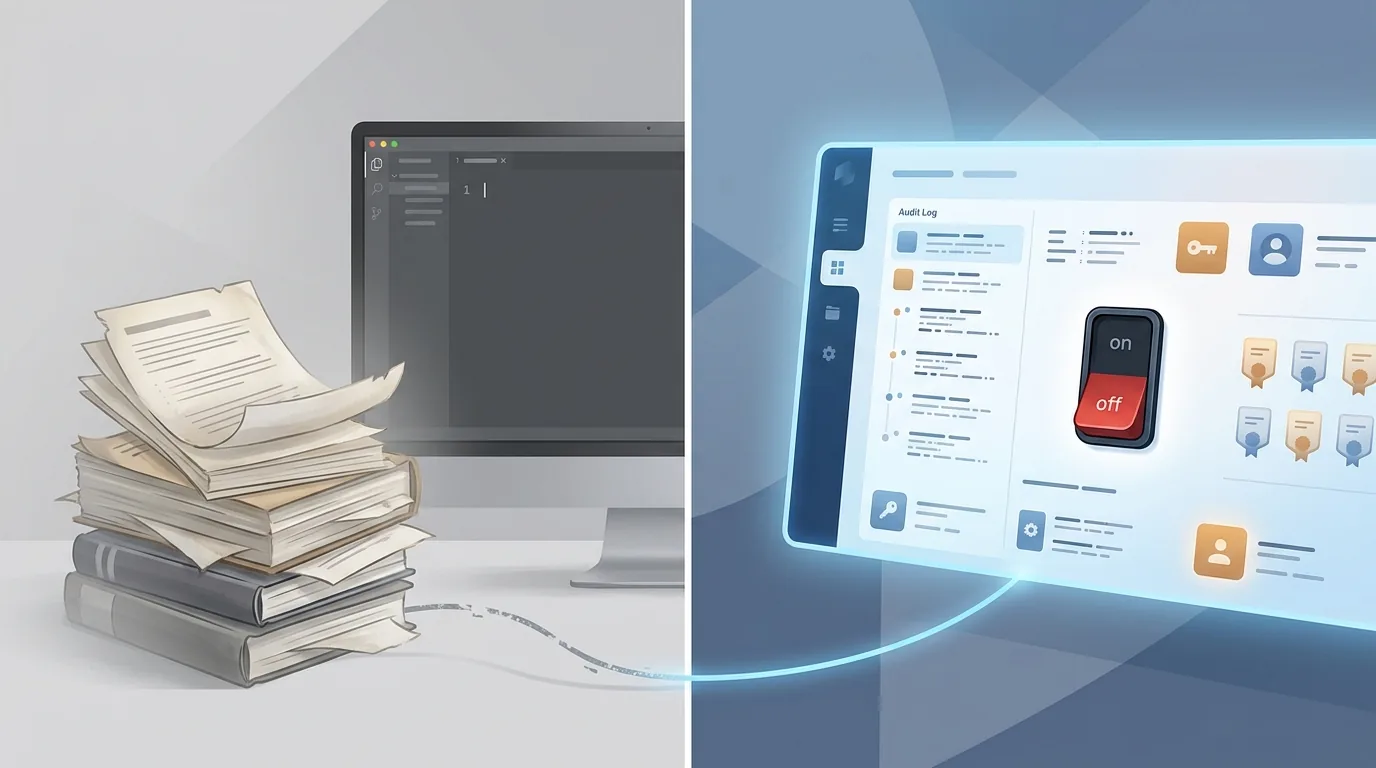
Here is the better mental model. Coding-agent adoption is not a SaaS rollout. It is closer to introducing a new piece of production infrastructure, on the same risk level as a payment processor or a customer database. Nobody trains their engineers to use the payment processor. The company stands up an operations function around it. Named owners. Audit logs. A kill switch. A budget line that is not seat-based.
The harness adoption question stopped being "are our developers trained" the moment vendors stopped trying to sell developers anything new.
So the question for an executive this quarter is not whether the developers have been trained. It is whether the operations function exists. Who owns the harness budget. Who owns the audit trail. Who owns the model swap when the vendor flips a default. Who decides which MCP servers the agent can talk to. If the answer is “the engineering manager, sort of, in their spare time,” the rollout has the same shape as the two-thirds that stall.
So what
Three things to take to your next leadership meeting.
One. Look at your harness rollout slide. If it names a vendor and a license count but it does not name a control plane, an operations owner, and a kill-switch runbook, the slide is living in 2024. Anthropic, IBM, Dell, Freshworks, and SailPoint all told a different story in 72 hours.
Two. Rename one budget line. Take the line called “developer training” and rename it “harness operations.” Same dollars, different function. Then see who in the room flinches. That flinch is useful information about who currently thinks they own this and who is hoping someone else does.
Three. Use the two-thirds number with your CFO. Ask which of your coding-agent pilots have a named operations owner and a defined production-readiness gate. The pilots that do not have those are statistically already in the stall, and no amount of additional developer training will move them out.
The good news inside all this. The developer story is essentially over. The boring story is the one that ships.
Sources
- Anthropic lands in London as AI-powered coding and the anxieties around it go mainstream - Fortune, 2026-05-21
- Anthropic's Code with Claude showed off coding's future, whether you like it or not - MIT Technology Review, 2026-05-21
- Claude Code 2.1.149 release notes - Releasebot / Anthropic, 2026-05-22
- Mastering the enterprise AI operating system at scale - SiliconANGLE, 2026-05-22
- Managing digital sovereignty in the enterprise - SiliconANGLE, 2026-05-22
- Enterprise AI governance critical as AI scales - SiliconANGLE, 2026-05-21
- SailPoint Announces New Integration with the Claude Compliance API - SailPoint, 2026-05-21
Written by Kinan Hamwi, Founder of Cerevisor.