What goes in the box between engineer and engineering manager on your org chart this quarter
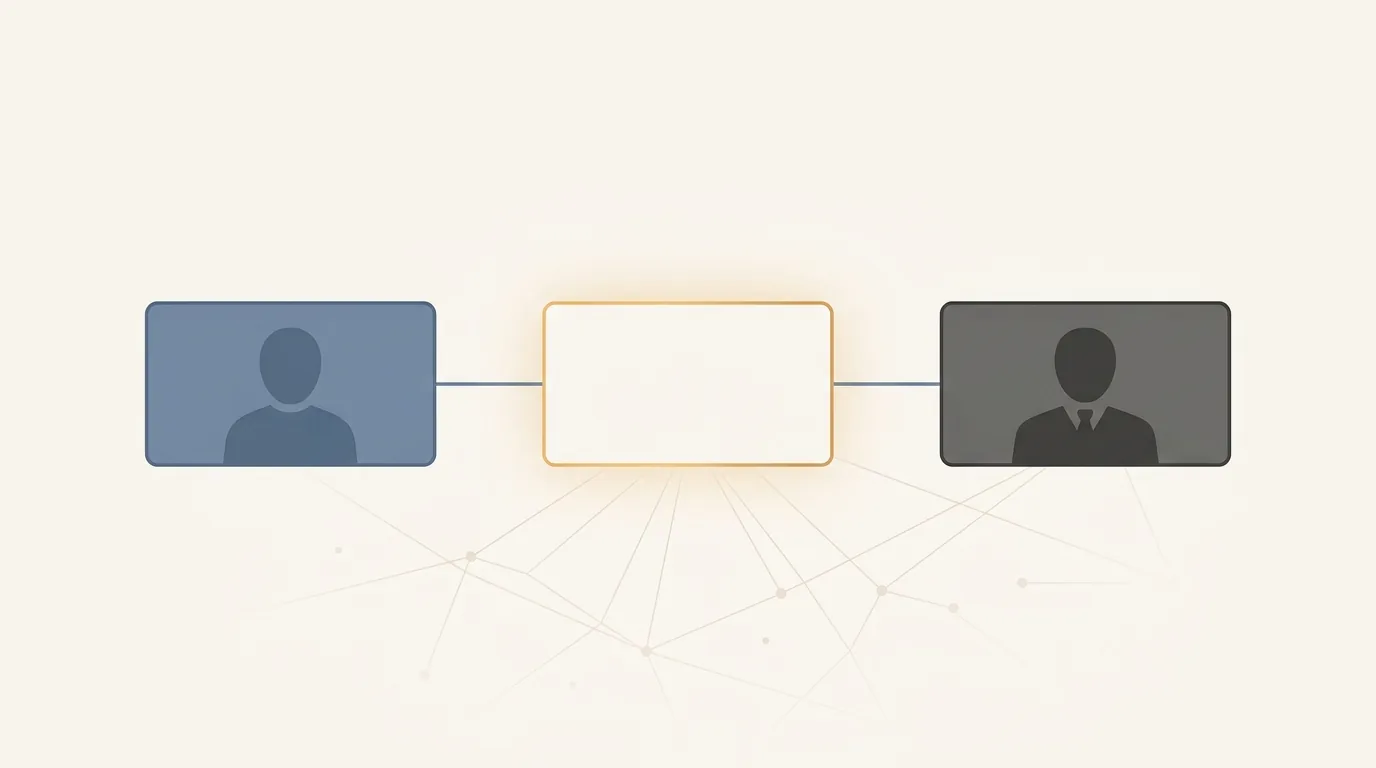
Three IBM rollout signals this week point to a third role hardening on the engineering org chart, sitting between senior IC and engineering manager. Most VPs are drawing the box in pencil. Here is what belongs inside it.
Three rollout signals from this week, IBM Bob hitting general availability with 80,000 internal users, independent UK tech press calling that pilot "guinea pig" status, and Indian IT journalism quantifying a 5-10x engineer-plus-agent productivity multiplier, all point at the same orphan box on the engineering org chart. It sits between a senior IC and an engineering manager, and the role inside it is doing three jobs: agent context curation, deterministic verification design, and governance and audit ownership. Staff the box and the IBM-style 45% productivity number lands. Skip it and the curve flattens around month four.
I had three different engineering leaders this week send me the same screenshot. Same mid-sized SaaS company, same org chart, same little orphan box sitting between a senior IC and the engineering manager, with a question mark where the role title should be. One of them wrote, “I have to fill this in by Friday and I genuinely don’t know what to call it.”
That is the conversation engineering org design has quietly turned into in late April 2026. Not “should we hire more juniors?” Not “should we build a platform team?” Both important, both already chewed over. The question hardening this week is much smaller and much more awkward to say out loud. There is a box on the chart that did not exist last quarter, and HR needs a title in it before the planning cycle closes. Most VPs of Engineering I talk to right now are drawing it in pencil.
Then on Tuesday, IBM gave us the clearest data point we have had so far. So let’s actually look at it.
What three teams just tried in public
The most interesting org-chart move this week was IBM moving Bob from internal pilot to general availability on April 28. The headline number is striking. According to IBM’s announcement, Bob is “currently used by 80,000+ IBM employees” with “surveyed users reporting an average 45% productivity gain.” But the part that matters for org-chart decisions is the rollout shape. IBM started with 100 developers in June 2025 and grew to 80,000 by April 2026. That is not a deployment curve. That is an organizational pattern.
"80,000+ IBM employees currently using IBM Bob; surveyed users report average 45% productivity gain."
A second pattern showed up in independent press the same day. The Register, covering the same launch, drily noted there were “80,000 big bluers pressed into guinea pig status last year,” which is a fair reframe. People did not all opt in voluntarily. They got assigned. Which means somebody at IBM decided who supervised whom, and made it land.
The third pattern came from outside the IBM bubble. Newslaundry ran a piece on April 27 about the Indian IT labour market, where Quess Corp data shows the top 10 services firms have cut fresher hiring roughly in half, from 2.5-2.75 lakh in 2022 and 2023 to 1.25-1.5 lakh today. Inside the same article, a senior tech founder named Hitesh Dharmdasani delivered the line I have been thinking about all week: “An experienced engineer with an agent is 5-10x more productive than if they were to hire someone.” Read that twice. The multiplier is not the agent. The multiplier is the experienced engineer plus the agent. The agent alone does not produce the lift.
Three rollouts, three lenses, one converging signal. Somebody is sitting between the agent and the IC, and the productivity story falls apart without that somebody.
Where the rollout actually breaks if the role is skipped
Look closer at how IBM made 80,000 work. The press release describes a stack that quietly tells the story of what the missing role does. Bob ships with persona-based agents, reusable playbooks, human-in-the-loop governance, a CLI called BobShell for auditability, prompt normalization, and sensitive-data scanning. None of that runs itself. Personas have to be defined. Playbooks have to be authored and updated. Audits have to be reviewed by someone who can read both the prompt log and the diff. Sensitive-data rules need an owner who knows what is sensitive in this codebase, not just a generic regex.
This is the actual shape of the work the orphan box represents. It is not a senior IC writing more code. It is not an engineering manager running one-on-ones. It is a role that owns the agent’s context, the agent’s verification, and the agent’s blast radius. IBM’s Instana team reportedly hit a 70% reduction in time on selected tasks, with about 10 hours weekly time savings. IBM Maximo around 69% on code generation and refactoring. Blue Pearl finished a typical 30-day Java upgrade in 3 days, saving over 160 engineering hours. Those numbers look like clean wins, and they are. But every team that posted a number had a small group of people doing the work just described. Their absence is what produces the other story this week, the one in the Newslaundry piece, where freshers used to do the small bounded tasks an agent now does, and the org charts that absorbed them are quietly thinning out.
The multiplier is not the agent. The multiplier is the experienced engineer plus the agent. The agent alone does not produce the lift.
That is the part worth sitting with. The 5-10x figure is not magic and not threatening. It is a real number that requires a real role to land. When the role is missing, two things happen, both predictable. An agent produces pull requests nobody trusts enough to merge. Or a senior engineer burns their week reviewing diffs that should never have been generated. Both happen. I have seen each one. The team that posts the 45% IBM number is the team that staffed the box.
It is also worth noticing what the IBM executive quotes do not say. Dinesh Nirmal, Senior Vice President of IBM Software, framed the launch with the line, “Every business is racing to modernize. But speed without control and transparency is a liability.” Neel Sundaresan, General Manager of Automation and AI at IBM Software, added, “Developers need a system that understands the full context of their work and can act on it.” Notice neither person said “the agent does the work.” They said “the agent operates inside something that controls and contextualizes it.” That something is a human role, with a name HR has not written down yet.
The pattern: a third role, three jobs
Here is how I would frame the role so it survives a planning meeting. This third box is not a senior IC and not an engineering manager. Call it whatever fits the culture, “agent supervisor,” “harness lead,” “AI-native staff engineer.” I do not have a strong opinion on the title. I have a strong opinion on the responsibilities, and there are three.
The role HR has not named yet is not a senior IC and not an engineering manager. It owns three things: the agent's context, the agent's verification, and the agent's blast radius. Combine the three and the productivity gain holds. Split them across existing roles and the curve flattens.
One: agent context curation. Someone has to write the playbooks, codify the conventions, and update them. This is what IBM calls persona-based agents and reusable playbooks. It is also what NetSuite’s agentskills.io standard codifies in a different vocabulary. The supervisor owns the answer to “what does an agent need to know about this codebase to be useful here this week?”
Two: deterministic verification design. The supervisor builds the test, evaluation, and metric scaffolding that lets a team trust output without reading every line. This is what the IBM Instana 70% number actually requires under the hood. Verification is not “did the test suite pass.” It is the smaller, harder question of which subset of agent-generated work needs a human eye and which subset is safe to merge. A senior IC can do this in narrow contexts, but the supervisor’s job is to design it for the team.
Three: governance and audit ownership. BobShell exists for a reason. So does sensitive-data scanning. The supervisor owns the audit trail and the kill switch. When something goes wrong, this person is the named owner. That is the part HR cares about, and the part most leaders are forgetting to write down before headcount lands.
If one role does all three, the productivity gain holds and the trust holds. If the three split across an EM and a senior IC and a security counterpart, the role becomes nobody’s full-time job and the IBM-style 100-to-80K curve flattens out around month four. That is when a CTO emails me asking why the rollout numbers stopped trending the way the pilot did.
What I would tell you over coffee
The box on the chart is real, and the title matters less than the responsibilities. Pick someone who already does two of the three, often a staff engineer who has quietly become the unofficial harness owner on their team, and write the third into their goals. Do not promote them to engineering manager just to give them headcount authority. The role’s value is technical, not headcount. And the next time fresher hiring comes up in a planning meeting, look at whether the supervisor seat got filled first. The “5-10x” line is not a prediction. It is a description. The lift only shows up when somebody is sitting in the box.
Sources
- Introducing IBM Bob: AI Development Partner that Takes Enterprises from AI-Assisted Coding to Production-Ready Software - StockTitan / IBM, 2026-04-28
- IBM's AI coding 'partner' Bob hits general availability - The Register, 2026-04-28
- IBM's AI coding 'partner' Bob hits general availability - DevClass, 2026-04-29
- 'Will AI replace me?': Anxiety grips tech workers amid mass layoffs, slowing recruitment - Newslaundry, 2026-04-27
Written by Kinan Hamwi, Founder of Cerevisor.