Do 0DTE options move my index even if I never trade one?
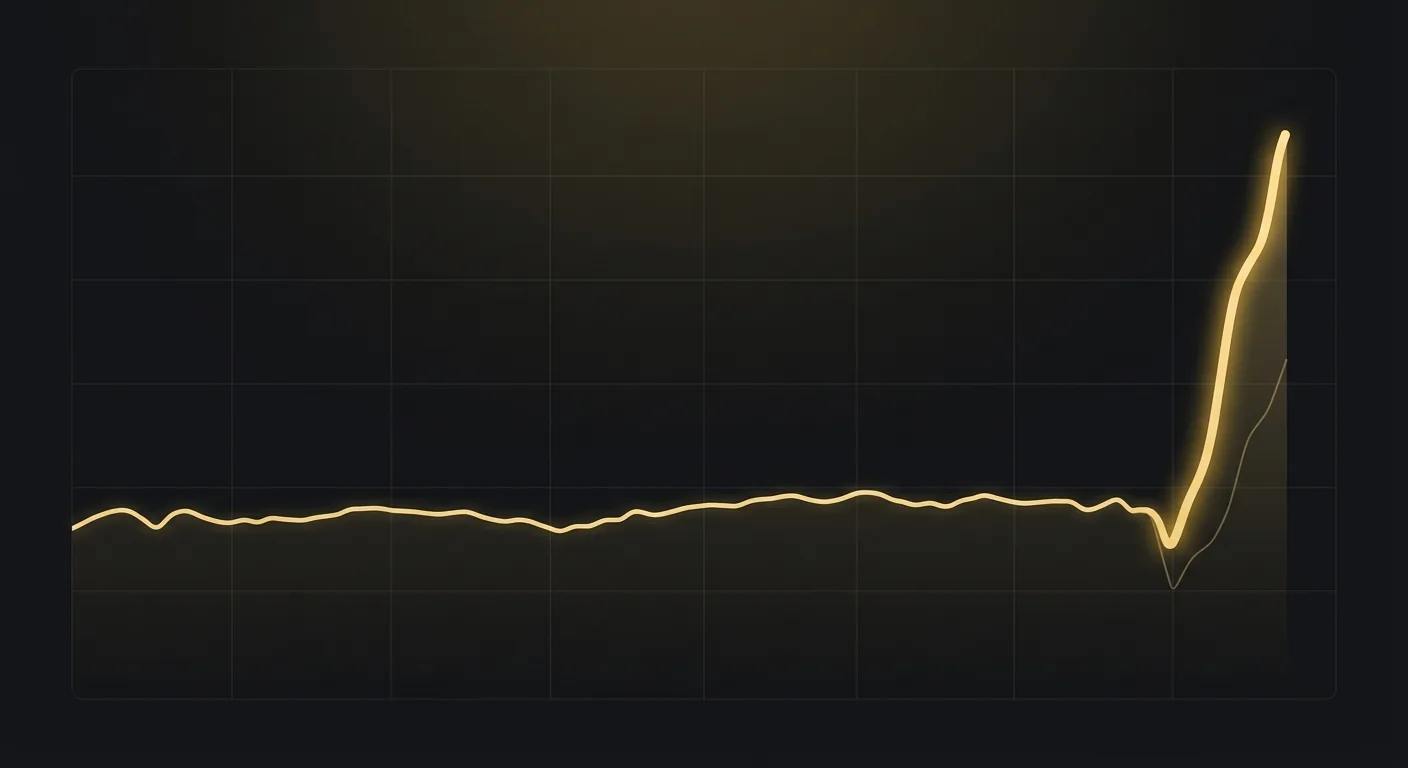
The myth is that zero-days-to-expiration options are a day-trader casino with nothing to do with a buy-and-hold index holder. The mechanism that says otherwise is dealer gamma hedging, which flips sign day to day and shapes the intraday range everyone trades into.
The comfortable belief is that 0DTE options are a same-day casino for gamblers and irrelevant to a boring index holder. The mechanism that quietly disproves the second half of that belief is dealer gamma hedging: when market makers who sold those same-day contracts are net short gamma, they must sell as the S&P 500 falls and buy as it rises, amplifying the intraday range the rest of us trade into. It is a risk surface, not a sell signal.
Open the options screen of any brokerage app this week and the loudest product on the menu is one that barely existed as a daily contract a decade ago. Zero-days-to-expiration options (0DTE, contracts that are born and die inside the same trading session, which is why their sensitivity to the final hour is so violent) now account for somewhere between 40% and 65% of all S&P 500 index options traded on a given day. The standard line, the one I have read in more than one respectable newsletter and heard from more than one sensible friend, is that this is a casino. A lottery ticket for day traders, fun for the gamblers, irrelevant to those of us who hold index funds and go outside. I once believed a softer version of that myself. The problem is the second half of the claim, the part that says it has nothing to do with the boring index we hold.
What 0DTE options are, and why they stopped being a sideshow
The casino framing was fair once. In 2016 same-day contracts were a rounding error. What changed was supply: the exchange added expirations on more weekdays, and a product that used to expire once a week became a thing you could buy expiring today, every day. Demand followed. By 2025 same-day contracts had climbed to a record 48% of total retail options volume, roughly half of everything the retail crowd trades in options at all. Inside S&P 500 index options specifically, the same-day share runs higher still.
So the kernel of truth in the casino story is real. A lot of this flow is short-dated speculation, and most of those tickets expire worthless by design. Where the belief goes wrong is treating the size of the pile as harmless. A product that is half of the daily volume in the deepest index options market in the world is not a sideshow. Something has to stand on the other side of every one of those bets, and that is where the myth quietly breaks.
"rising from 5% of SPX options volume in 2016 to over 40% since the introduction of Tue/Thu expiries"
What dealer hedging does to the index we actually hold
The other side of a retail same-day bet is almost always a market maker. When they sell a same-day option, they take on a position that has to be neutralized in the underlying, and they rebalance that hedge continuously as the S&P 500 moves. Studies from Cboe and academic groups put that dealer hedging at roughly 25% to 40% of S&P 500 volume on a typical day. The direction of the hedge, though, is not fixed. It depends on the sign of what dealers are holding, and that sign flips.
| Dealer position | Hedge behavior | Typical S&P 500 intraday range |
|---|---|---|
| Net long gamma | Buys dips, sells rips (dampening) | ~25 handles |
| Net short gamma | Sells falls, buys rises (amplifying) | ~60 handles |
That is the part the casino framing misses. A calm reading on the VIX, the Cboe gauge of expected S&P 500 volatility, can sit on top of a day that feels violent to anyone watching the tape, because the lived range is set less by the headline volatility number and more by which way dealers are hedging their same-day book that afternoon. To be honest about the size of it, Cboe’s own researchers argue the aggregate hedging footprint is modest against the enormous S&P futures market.
Cboe estimates 0DTE hedging flows at roughly 0.04% to 0.17% of daily S&P futures liquidity. Large enough to shape an afternoon's range, small enough that the crash-tomorrow version of the story is overcooked. Both things are true at once.
Short gamma, long gamma, and which way the hedge pushes
Here is the mechanism in plain English. Gamma is just the rate at which a dealer’s hedge requirement changes as the index moves: high gamma means a small move in the S&P 500 forces a big adjustment to the hedge. A same-day option carries its peak gamma from the opening bell to the close, because the closer expiration is, the more frantically the hedge has to chase the price.
When dealers are net long gamma, their hedging leans against the move. The index ticks up, they sell a little; it ticks down, they buy a little. That is a shock absorber, and it is why price sometimes seems glued to a strike. When dealers are net short gamma, which happens when the crowd has aggressively bought same-day protection into a falling market, the hedge runs the other way. Now they must sell as the index falls and buy as it rises, pressing on the move instead of cushioning it.
The casino risk that matters is not the gamblers losing their stake. It is that the house hedging their bets is trading in the same index we hold, in the same direction the tape is already going.
Nobody at the dealer desk is trying to move your index. They are just staying neutral. But when enough same-day demand is one-sided, staying neutral is itself a procyclical force, and a passive index holder inherits the wider swing without ever touching an option.
Reading a calm VIX and a wild tape as a risk surface
So what do we actually do with this. Not panic, and not trade it. On July 9 the VIX rose 4.8% to 16.90, a number that reads like a quiet market, while the intraday path was anything but quiet for anyone watching intraday. The useful move is to stop reading a low volatility gauge as a promise that the afternoon will be smooth, and to treat a violent last hour as a feature of the current market structure rather than a signal that something is broken.
There is an agentic wrinkle worth naming, since it is where this stream lives. Retail and now AI copilots supply a growing slice of that same-day options flow. An agent instructed to buy same-day protection into a falling tape is, without meaning to, adding to the one-sided demand that pushes dealers short gamma. The tool that felt like it was reducing our risk can be feeding the very hedging loop that widens the swing. That is worth knowing before we hand a copilot a same-day options mandate.
The question I keep turning over is not whether the same-day boom is a casino. It plainly is one, for the people playing it. The question is what we owe our own risk-reading when the house’s hedge, and not our own conviction, is setting the range on the index we have quietly held for years.
This is editorial analysis, not investment advice. Cerevisor does not hold or recommend the named positions, and information here can become stale within hours of publication.
Sources
- Volatility Insights: Evaluating the Market Impact of SPX 0DTE Options - Cboe Global Markets
- 0DTE options hit record 48% of total retail options volume as day-trading culture goes mainstream - Crypto Briefing, 2026-07-05
- Stock Market News for July 9, 2026 - Yahoo Finance (Zacks), 2026-07-09
- Record 0DTE volume reshapes the S&P 500 - SpotGamma, 2026-07-07
Written by Kinan Hamwi, Founder of Cerevisor.