What an AI fund's alternative-data edge is worth once the second buyer signs
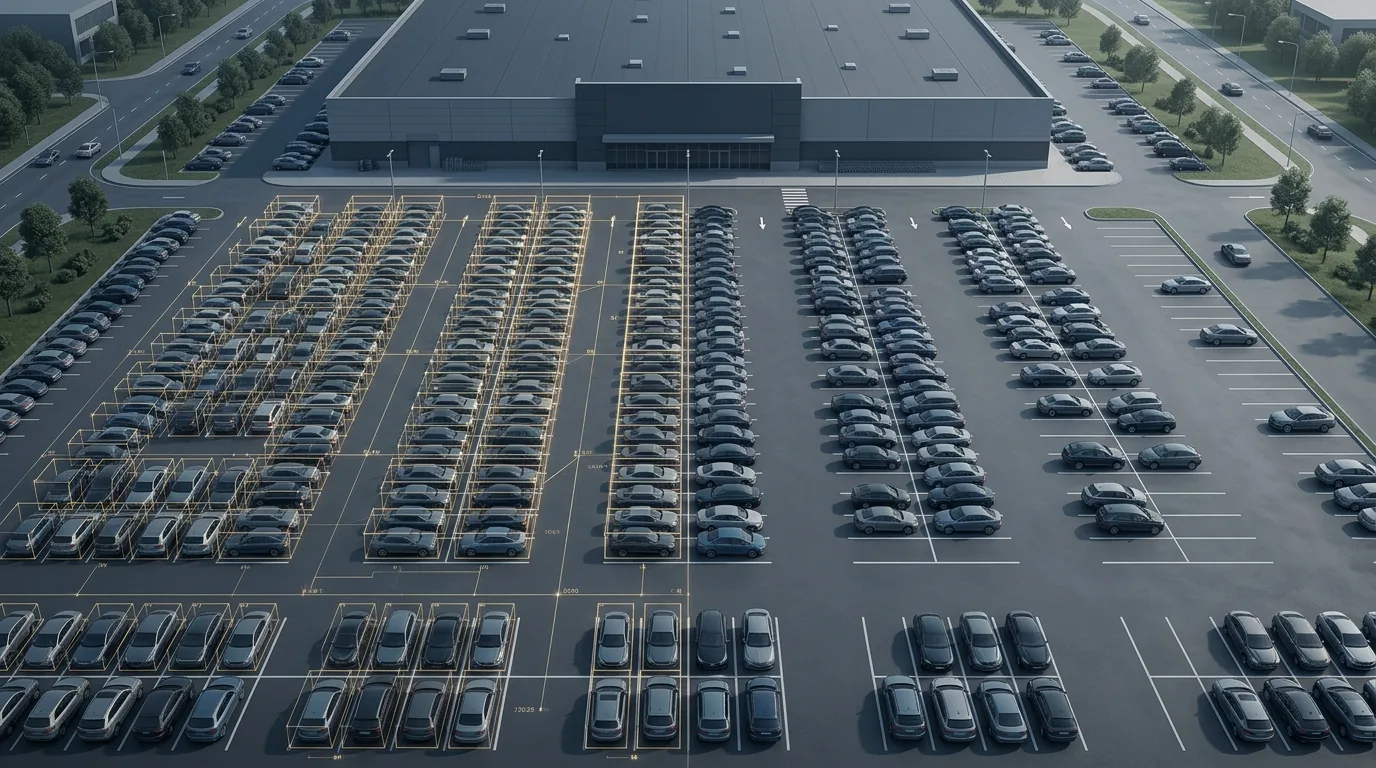
Alternative-data edges do not fade gently as more funds buy the same feed. They drop at a cliff edge the moment a vendor's exclusivity contract lapses, which makes an AI fund's data edge a dated position in the vendor's queue rather than a property of the data.
An alternative-data edge does not erode gently as more funds buy the same feed. It drops at a cliff edge the moment a vendor's exclusivity contract lapses and the data goes to broad distribution. That makes an AI fund's data edge a dated position in a vendor's queue, not a property of the data, and it changes how we should size any track record built on it.
On May 20, at the Sohn Hong Kong conference, fund managers took the stage and pitched their best ideas. Reuters listed them: a Taiwan-listed circuit-board maker, a Japanese engineering firm riding the data-centre build-out, a Thai pet-food company. AI-infrastructure names sat next to consumer names, and Gen Z spending habits were offered up as an investable thesis. None of that is wrong. What caught me is that consumer-spending trends are exactly what alternative data was sold to give a fund a private read on, ahead of everyone else. Card-transaction feeds, foot-traffic pings, satellite images of parking lots. The canonical proof is an academic study that parsed 4.8 million satellite images of parking lots across roughly 67,000 US retail stores and found early users earned 4 to 5 percent in the three days around an earnings print. So here is the claim worth auditing: does that edge belong to the data?
Start with the part of that satellite study quoted less often. The 4 to 5 percent went to the early, sophisticated users. The study also traced who sat on the other side, and it was less-sophisticated investors handing over the return. An edge is somebody else’s loss, and the data named both seats.
Now run the feed forward a few years. Credit-card transaction data was the marquee early-adopter edge of the last decade. Today, by the read of the data-scouting firm Neudata, its predictive power for earnings surprises has diminished measurably over the past five years. Same data, same vendors, far less signal. Yet the spending climbs. Exabel’s 2026 buy-side survey, across firms managing about 2.4 trillion dollars, found 94 percent expect to raise their alternative-data budgets this year, and 54 percent had already grown those budgets by half or more in two years. Neudata puts the market near 2.8 billion dollars in 2025 and heading toward 10 billion, with the largest funds spending 15 to 60 million dollars a year. We are paying more, every year, for signal worth less.
| Stage | Signal value |
|---|---|
| Exclusive to a few early buyers | 4-5% abnormal return in the 3 days around earnings |
| Broadly distributed for years | predictive power "diminished measurably" |
There is one more number that reads like a contradiction. Neudata reports the average dataset is now used by just 20 investment firms, down from 25 the year before.
Adoption falling, datasets growing more exclusive rather than less. That is the industry telling on itself.
Here is why those numbers all point one way. An alternative-data signal does not decay on a gentle slope as buyers accumulate. It decays at a cliff.
While a feed is exclusive, or close to it, the few early buyers know something the price does not yet reflect, and they are paid for being early. The moment the vendor’s exclusivity contract lapses and the feed goes to broad distribution, the signal does not fade. It falls off a shelf. Once enough funds, and now enough automated agents, trade the same feed, the price embeds the information before any single buyer can act on it. The data still describes the world accurately. It just stops describing anything the market has not already priced.
So the edge was never the data. It was the exclusivity window, rented on the vendor’s terms, with an expiry the buyer does not control. The biggest platforms know this precisely. Citadel, Millennium, Point72 and Balyasny strike exclusive licensing deals that lock rivals out of specific datasets for set periods. They are not buying information. They are buying a place near the front of the queue, and the clock that keeps running on everyone behind them. The slide from 25 datasets per firm to 20 is that strategy showing up in the average.
An alternative-data edge is a dated position in a vendor's distribution queue. The data is the receipt. The exclusivity window is the asset, and the vendor, not the fund, decides when it expires.
A signal does not lose its edge slowly as people notice it. It loses its edge the moment everyone is already holding it.
We do not get a clean public number for a feed crossing its cliff, because vendors do not announce exclusivity lapses. But the same physics is visible in plain sight, in positioning. Bank of America’s May survey of 200 managers running about 517 billion dollars measured how crowded the consensus trade had become.
"A record 73% of professional investors now call 'long global semiconductors' the most crowded trade on the planet, up from 24% in April, the steepest one-month jump on record in the survey's history of tracked positioning."
A position that went from 24 to 73 percent crowded in a single month is a signal we can watch decay into consensus. By the time three-quarters of the desk holds it, the edge is gone; it is just a trade. Goldman’s desk told Bloomberg that hedge funds were already trimming the chip rally to bank profits. An honest description of an alternative-data edge reads the same way: real, sizeable, and renting time. There is a fair counter-case, and Neudata cites firms that hold it. The durable edge is not access to a feed, it is the skill of combining several ordinary feeds into something no single seller can package. That is a different game, and a harder one to fake.
When a fund or a polished pitch leans on an alternative-data edge, data quality is not the question that matters most. Three better ones: how many other buyers hold this same feed, how long the exclusivity runs before it lapses, and whether the returns come from the data or from the modelling around it. A track record built inside an exclusivity window does not forecast the years after it. The cost runs the other way too: that 15-to-60-million-dollar annual bill is close to fixed, while the edge it buys is not. CNBC reported this week that Google is giving ordinary users always-on agents that monitor information in the background. When the monitoring tool is a consumer feature, the tool is not the edge either.
What I keep returning to is the asymmetry. The vendor sells the same feed many times and books recurring revenue. The fund buys it once and watches its value run down on a clock it cannot see. We tend to audit a fund on the cleverness of its data. The sharper question is who is compounding here: the fund renting the signal, or the vendor renting it out.
This is editorial analysis, not investment advice. Cerevisor does not hold or recommend the named positions, and information here can become stale within hours of publication.
Sources
- Nvidia, AMD Bulls Beware: Wall Street's Most Crowded Trade Just Flashed A Sell Warning - Benzinga, 2026-05-19
- AI Supply Chain, Gen Z Spending Among Hedge Fund Picks at Sohn Hong Kong - U.S. News (Reuters), 2026-05-21
- Google debuts new AI models, personal AI agents in effort to keep pace with OpenAI and Anthropic - CNBC, 2026-05-19
- Hedge fund alt data spending set to surge, says new research - Hedgeweek, 2026-02-10
- Hedge Funds Are Pouring Billions Into Alternative Data - WebProNews, 2026-02-23
- How hedge funds use satellite images to beat Wall Street and Main Street - UC Berkeley Haas Newsroom, 2021-01-01
Written by Kinan Hamwi, Founder of Cerevisor.