Why Overseeing AI Agents Tires Leaders in a New Way
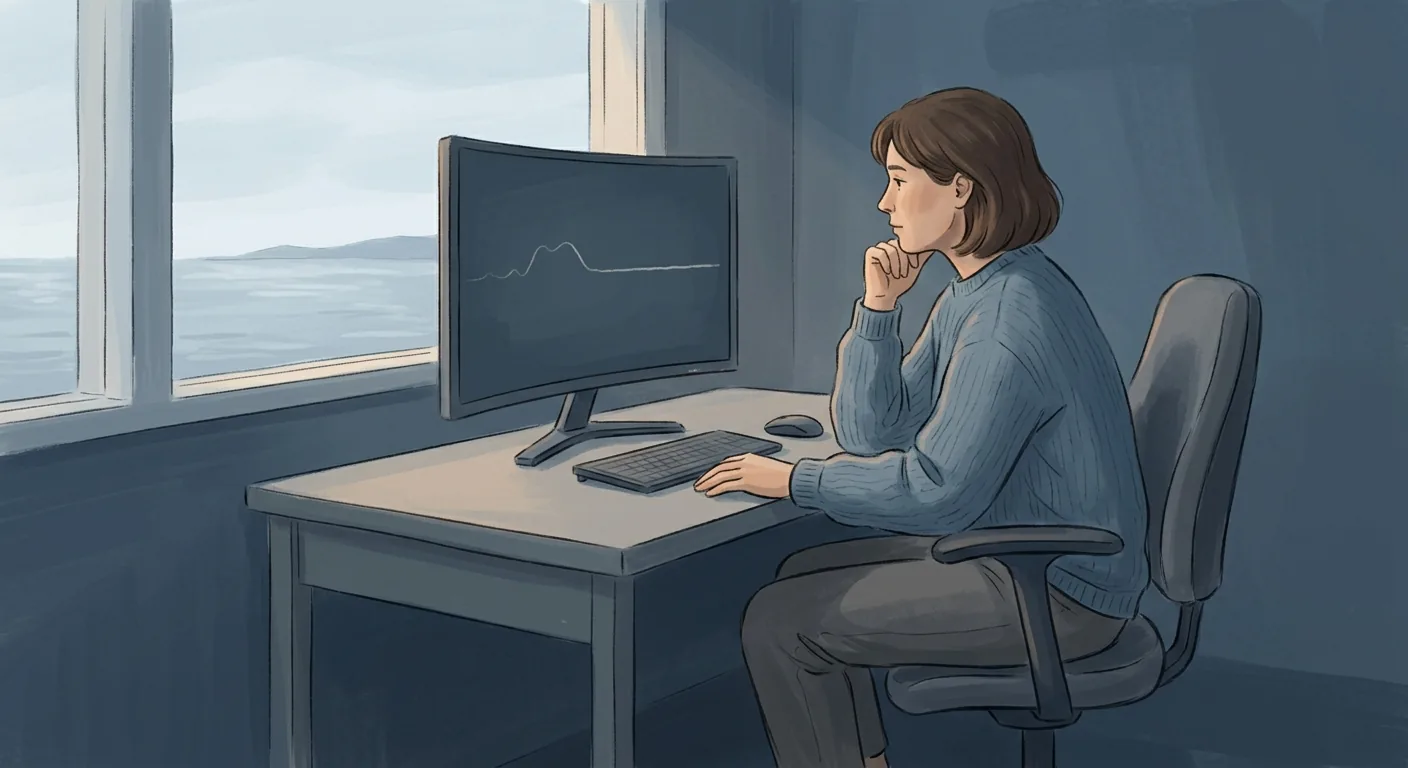
Watching AI agents work feels different from doing the work yourself, and attention researchers have a 75-year-old name for the kind of tired that follows. A new methodological paper in Human Factors says the field is finally moving into the workday where most leaders now live.
Doing the work tires us in one way; watching work get done tires us in another. A new methodological paper in the journal of the Human Factors and Ergonomics Society says the long-studied science of vigilance, the kind of attention spent on monitoring rather than acting, is finally moving out of the laboratory and into the operator settings where most leaders now live. The new tired is a real, named thing.
A founder I was on a call with last week said something I keep thinking about. She had spent the quarter putting AI agents into three of her company’s workstreams. “I’m not less busy. I’m more tired. And it’s a different tired. I can’t describe it.” There is a name for the kind of tired she was describing. Attention researchers have been studying it for seventy-five years. It is called the vigilance decrement, and the leader’s day is becoming its native habitat.
What the research shows
Vigilance is the technical name for the kind of attention spent when the job is to watch for something rare and important rather than to do something steady and active. Air-traffic controllers run on vigilance. Quality inspectors run on vigilance. Anyone whose work is mostly catching the moments when a system is about to do the wrong thing runs on vigilance. The research, going back to studies of radar operators during the Second World War, has found one stubborn pattern: vigilance performance degrades over time, often within the first fifteen minutes of a watch, even when the person watching is well-rested and motivated.
What is new is where this kind of attention is showing up in working life. A peer-reviewed methodological paper by Judi See of Sandia National Laboratories and Jing Chen of Rice University, posted online in March in the journal of the Human Factors and Ergonomics Society, argues that vigilance research is moving out of the laboratory and into two settings where the felt cost of supervision is now most visible: operator simulators for human-automation systems, and industrial inspection sites. The paper is a methodological piece rather than a single new finding, but the punchline matters for anyone whose day has shifted toward overseeing rather than doing.
"Overcoming the methodological challenges associated with experiments in nontraditional settings provides rich observations and insights that advance the study of vigilance and support the design of countermeasures that can mitigate the vigilance decrement."
That phrase, design of countermeasures, is the part worth sitting with. It points at the gap between what supervisory roles ask working attention to sustain and what working attention can actually carry. A focused review by P.A. Hancock in the journal Ergonomics earlier this year said the same thing in plainer language: automation tends to complicate operator cognition more than anyone expects, and unrealistic expectations of human vigilance are part of why so many supervisory roles end the day depleted in a way the workload report cannot explain. This is the same territory I sat with last week when writing about the new tired of supervising rather than doing, and the same shape shows up on the engineering side, where the question of who is the supervisory engineer for the AI agents has become its own org-chart box.
The day stops being tiring in the way doing tires you and starts being tiring in the way watching tires you. The cost is real. The metrics most companies use to measure a workday were not built to see it.
What it doesn’t tell us yet
This is one methodological paper, not a settled population estimate. It does not name AI agents specifically; the lens is operator simulators and industrial inspection. The translation to a leader’s day of checking on three automated workstreams is justified, but it is a translation, not a verbatim claim. The vigilance literature is mature and well-replicated in classical settings; its application to AI-team supervision is still being built. A complementary empirical study earlier this year (Ranjani Narayanan and colleagues in the International Journal of Human-Computer Interaction) found that people supervising AI teammates show limited sensitivity to the severity of the AI’s errors even when they understand the AI well. Same direction, different mechanism. Both are early.
One thing to notice in your work today
If today involves a stretch where the work is mostly watching agents do things, reviewing a draft, approving a plan, checking a dashboard, notice the kind of tired sitting in the chair at the end of it. The brain-fry research from earlier this season was about overload from many parallel streams, the kind that breaks people through oversight rather than delegation. The vigilance research is about something else: the slow, low-arousal fade that happens when steady monitoring is the job. The two feel similar from the inside but call for different responses. If a half-hour of overseeing leaves you drained in a way an hour of doing would not, the noticing is the point. The research community is just starting to study this kind of attention in working settings, and the language for it is still catching up. Taking the new tired seriously while the language catches up is a small, honest practice.
Sources
- Vigilance Research Beyond the Laboratory: Methodological Considerations and Practical Insights - Human Factors: The Journal of the Human Factors and Ergonomics Society, 2026-03-19
- Human vigilance in the age of intelligent machines: Challenges and prospects - Ergonomics, 2026-01-12
- Designing for Oversight: An Empirical Investigation of the Dual Impact of AI Dependency and Information Abstraction on Human Supervision in Decision-Making Teams - International Journal of Human-Computer Interaction, 2026-02-05