What Self-Discrepancy Theory Says About AI Work Stress
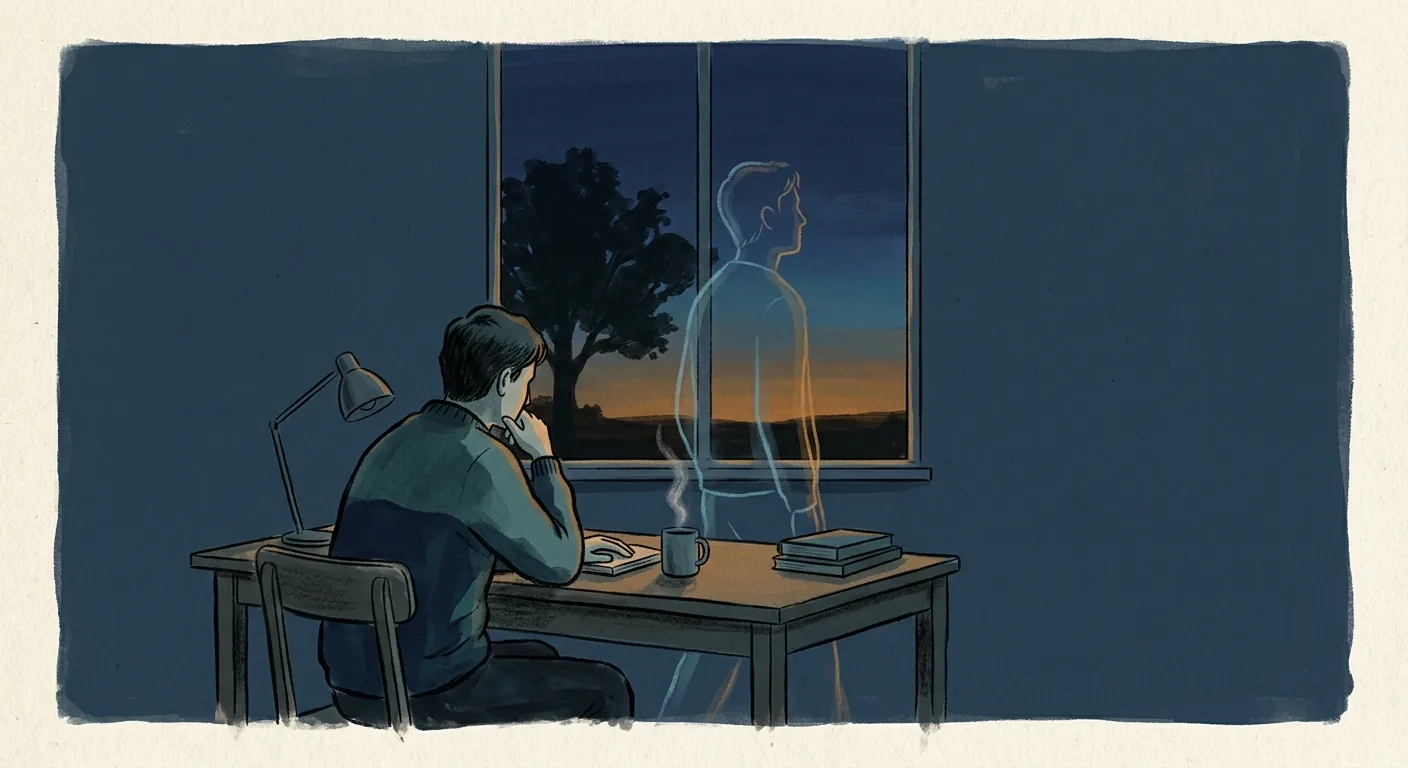
Self-discrepancy theory splits the distance between who someone is and who they feel they should be into two different feelings. An AI that makes more feel possible tends to widen the sharper one. A calm look at the ideal self, the ought self, and which shoulds are worth keeping.
A decades-old theory splits the gap between who a person is and who they feel they should be into two different feelings: falling short of a hope feels flat and disappointed, while falling short of an obligation feels anxious and keyed-up. An AI that makes more feel possible tends to grow the second gap fastest. The quiet skill is telling which shoulds are genuinely one's own.
A founder I spoke with last week described the end of her Tuesday like this. The dashboard was thrilled. Three things had shipped that used to take three days. And she still closed the laptop with a low, restless feeling she could not name, somewhere between disappointed and on edge. Nothing had gone wrong. She just felt she should have done more, or done it differently, or already be the kind of operator who runs this fast without the ache. There is a name for the gap she was feeling, and a theory that splits it in two.
The Ideal Self, the Ought Self, and Two Different Aches
The theory is self-discrepancy theory, laid out by the psychologist Tory Higgins back in 1987. It starts with the actual self, meaning who a person believes they are right now. Then it adds two better selves that the actual self gets measured against. The ideal self holds hopes and wishes, the person one would love to become. The ought self holds duties and obligations, the person one feels obliged to be.
The useful part is what happens when there is a gap. Falling short of the ideal self produces one family of feelings: dejection, the flat and disappointed sense of a hope not reached. Falling short of the ought self produces a different family: agitation, the anxious, guilty, keyed-up sense of a duty failed. Same distance from “better,” two distinct aches.
This is not just old theory. A study published in a clinical psychology journal in late 2024 put a modern measure of these gaps to a group of ordinary adults and found the felt gaps traveled with real emotional vulnerability. The ideal-self gap tracked a personality tendency toward worry and low mood, what psychologists call neuroticism, at a medium level.
"We administered the S-DS to a non-clinical sample (N= 422, mean age = 23.26, 90% female)."
Here is the part the study does not say, and I want to be clear it is my read and not theirs. An AI that makes more feel possible tends to inflate the ought self fastest. The ideal self moves slowly. The ought self, the felt list of shoulds, updates the moment a tool proves something is now doable. Be faster. Ship more. Use all of it already. So the daily feeling drifts from the slow disappointment of a missed hope toward the sharper edge of a failed should. This is the same territory we were in when heavy AI reliance quietly erodes the felt sense of being capable. The tool changes the standard before it changes the person.
The gap to the ideal self feels like disappointment. The gap to the ought self feels like anxiety. An AI that makes more feel possible tends to grow the second one fastest, because "should" updates the instant the tool proves something is doable.
The Limits: a Young Sample, an Older Theory, and No AI
Hold this lightly. The recent measure came from a young, mostly female group, average age around 23, not a room of working leaders. The split between the two feelings rests on landmark work from the 1980s, not a fresh replication this week. No new study landed on this exact question, so I am leaning on research published earlier and a framework that is decades old. And none of it studied AI. The numbers are correlational, which means the gaps travel with the feelings but nothing here proves one causes the other, and nothing here watched a person get through a workday with a tool in the loop. The theory is a good map. It is not a measurement of one particular Tuesday.
The tool changes the standard before it changes the person.
Sorting Real Shoulds From Borrowed Ones on an AI-Fast Day
The move is small. Next time that end-of-day unease shows up after a fast, tool-heavy day, name which gap it is. Is it the flat kind, a hope you did not reach? Or the keyed-up kind, a should you feel you failed? Naming it takes the edge off the not-knowing, and it points at different things. The flat kind is often just a full day. The keyed-up kind is worth a second question: is this should genuinely yours, or one the tool’s new pace installed this quarter? Some shoulds are worth keeping. Plenty are borrowed from what the software made look easy, the same way a team can mistake a faster tool for a higher bar when it asks where the real returns show up first. The tools will keep making more things possible. The quiet work is noticing when “possible” has turned into “should have,” and deciding, one honest evening at a time, which shoulds are yours to keep.
Sources
- An Instrument for Evaluating the Self: The Self-Discrepancies Scale in Non-Clinical Participants - Clinical Neuropsychiatry, 2024-12-01
- Self-Discrepancy: A Theory Relating Self and Affect - Psychological Review, 1987-07-01
- Individual differences in self-discrepancies and emotional experience: Do distinct discrepancies predict distinct emotions? - Personality and Individual Differences, 2010-08-01
Written by Kinan Hamwi, Founder of Cerevisor.