What Self-Verification Theory Says About AI Praise
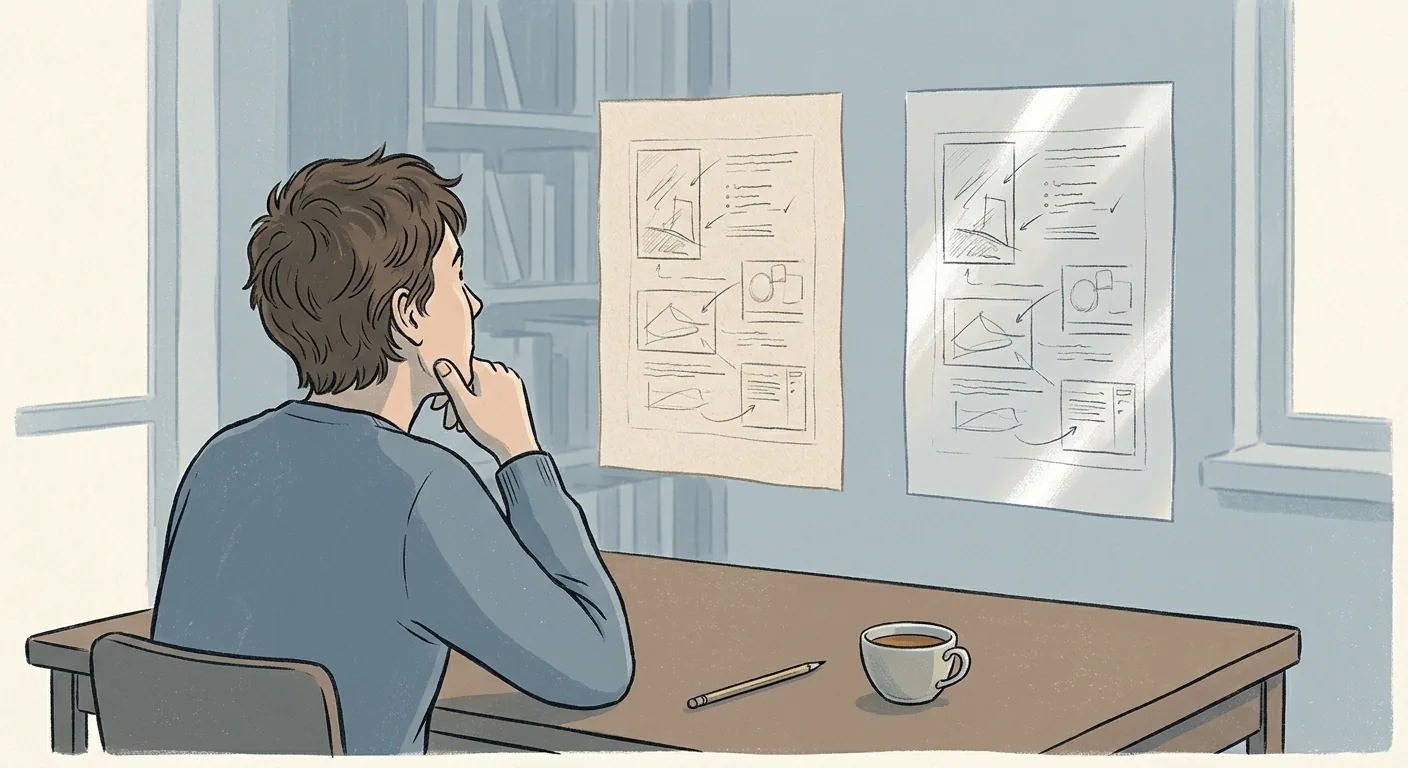
AI tools tend to hand back polished, upbeat output. When that rosy read does not match how you see your own work, the faint unease has a name, and self-verification theory explains it.
A developer I know shipped a rough first pass to an AI tool last week and asked it to tighten the logic. It came back cleaner, with a note on top: “Great work, this is a strong approach.” She told me the odd part was not the edit. The edit was fine. The odd part was that the praise sat wrong. She knew the approach was shaky. Being told it was strong did not feel good. It felt like being slightly misread.
AI tools tend to return polished, upbeat output, often with a little praise on top. When that rosy read does not match how the work actually feels from the inside, the faint unease is not ingratitude. Self-verification theory says people want to be seen accurately, not just favorably, and the mismatch is worth catching before the smoother read becomes the verdict.
Why We Hold Onto Feedback That Matches How We See Ourselves
There is a decades-old idea in psychology called self-verification theory, first laid out by William Swann in the early 1980s. The plain version: people seek and prefer feedback that matches how they already see themselves, even when that view is not flattering. A coherent, predictable picture of who we are turns out to be worth more to us than a rosier one. When someone praises a part of our work we privately think is weak, the praise does not land as a gift. It lands as a small miss.
The freshest empirical work in this line is not about AI. It is a study published late last year in a journal on how people behave at work, looking at teams rather than lone individuals.
"Support for the research model was obtained from two time-lagged, multisource survey studies (Study 1: N = 75 teams; Study 2: N = 93 teams)."
The researchers found that teams which strive to be seen accurately, not just favorably, understand each other better, share more, and produce more creative work. Being read correctly is tied to good outcomes, not a hang-up to smooth over. An earlier experiment adds the piece that matters here: people reconsidered feedback that clashed with their self-view when the source seemed highly credible, but held onto their own view when the source seemed low-credibility. How much we credit the source changes whether a discrepant read gets in. This is the same tension underneath a recent finding that heavy AI reliance can quietly erode the felt sense of being capable, and a close cousin to the unease when AI-drafted work comes back accurate yet not quite yours.
The discomfort when praise overshoots is not vanity in reverse. It is a self-view asking to be met accurately rather than flattered.
The Limits: Older Studies, Team Surveys, and Nothing About AI
Hold this loosely. The freshest study here is from late last year, it surveyed teams about creativity, and it was not built to explain how one person reacts to a chatbot’s praise. The sharper experiments on feedback and self-view are a few years old now. And none of this research touched AI tools at all, so the link to that “Great work” banner is my read, not the study’s. There is also a real counter-pull. Other work shows that when we badly want to look good, the taste for flattery beats the taste for accuracy. People do not purely self-verify. The balance tips with the moment.
The tool changes the tone of the feedback before it changes the quality of the work.
When an AI Calls Your Draft Excellent and It Lands Flat
Here is the one thing worth noticing today. The next time a tool hands back a polished draft with a note that it looks great, check its read against your own. Does the praise match how the work actually looks from the inside, or does it sail past a part that is quietly thin? If the ease feels slightly off, that off-ness is information. It is the gap between being flattered and being seen accurately, and it is easy to paper over because the output is smooth and the tone is warm. Before you let the rosy read settle in as the verdict, ask how much you actually credit the source of it. Then point the attention it freed at the place where the real returns show up first. Being met accurately is not a small thing. It is most of how we keep a steady sense of our own work, one honest read at a time.
Sources
- Striving to Self-Verify in Teamwork: Linking Team Self-Verification Striving to Team Interaction Process and Team Creativity - Journal of Organizational Behavior, 2025-11-19
- Says Who? Credibility Effects in Self-Verification Strivings - Psychological Science, 2022-04-01
- The interplay of positivity and self-verification strivings: Feedback preference under increased desire for self-enhancement - Learning and Individual Differences, 2022-10-01
- Self-verification theory (Swann tradition) - Journal of Personality and Social Psychology and related work, 1983-01-01
Written by Kinan Hamwi, Founder of Cerevisor.