The Week in Autonomous Coding Agents: Cerevisor 3.7.1 Adds Factory Mode, Where Done Means Checked
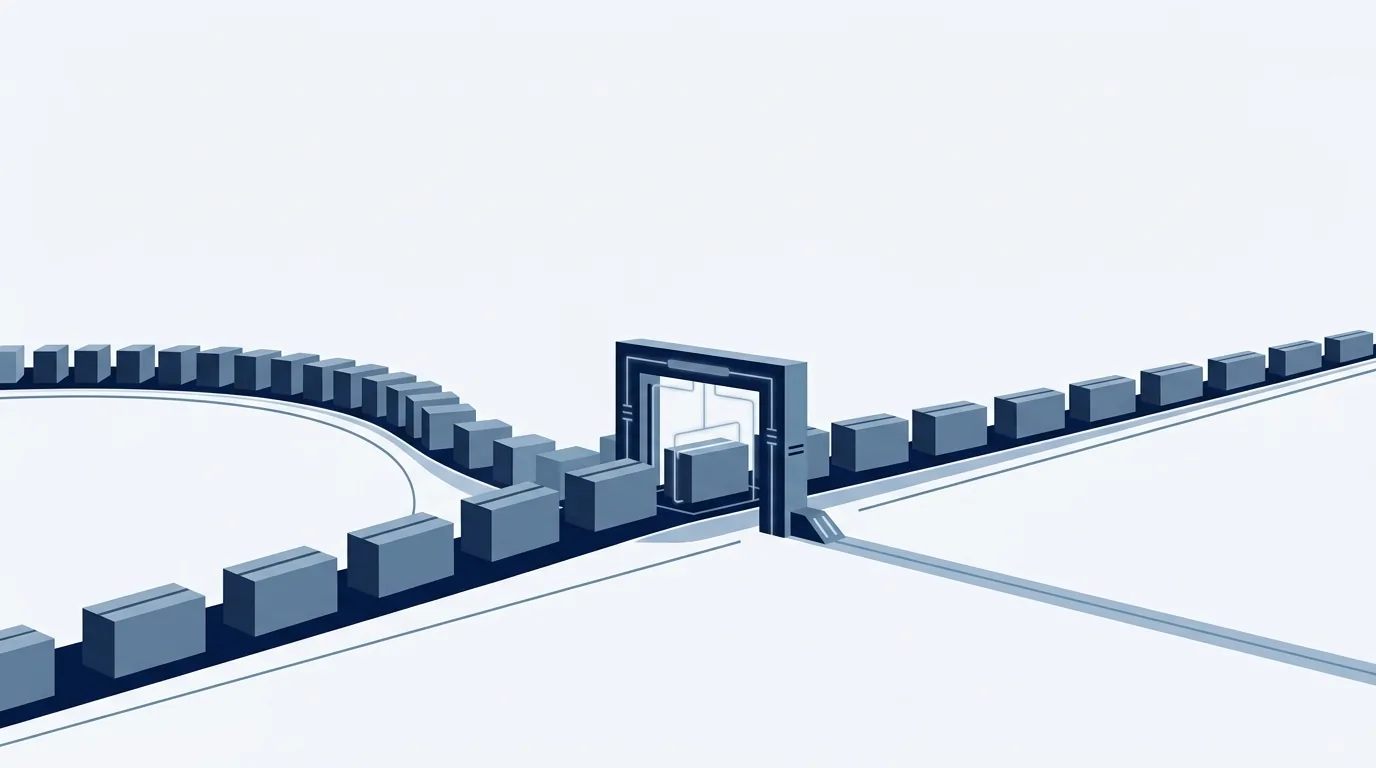
Cerevisor 3.7.1 adds Factory mode, a queue of work where done means checked. Plus three posts on approvals, the checker, and GPU memory for four agents.
The week in one glance
- Cerevisor 3.7.1 is the headline. Factory mode works through a list of things to build, one item at a time, has a separate agent check each result, and commits each finished item to a local branch. Nothing is ever pushed.
- Around it: scripts and other programs on the same computer can run saved workflows, an approval shows the documents being approved and takes a third answer, and new models reach every picker without an app update.
- Three posts: thirteen patterns for approving, checking and auditing agent work, what running Factory mode is like and where it stops, and why a 70B model that loads on a 48 GB card still runs out of memory with four agents.
The theme: an autonomous coding agent is only as good as the check at the end
An autonomous coding agent writes and changes code with nobody steering each step. The question I kept coming back to this week is who says the work is finished. In everything I published, a green result turned out to measure something smaller than it claimed. In one test queue of mine the project’s tests ran clean, 48 passed and none failed, and the checking agent still wrote FAIL, because it could not confirm the sound and the zoom by using the game. Before 3.7.1, the approval card in Cerevisor showed a snippet of the agent’s chat reply, which is an agent describing its plan and a different thing from the plan. A quantized 70B model loaded on a 48 GB card with room to spare, then ran out of memory once four agents worked in parallel. Cerevisor 3.7.1 is my answer to the first two. The third shows the same gap one layer down, in the serving engine.
What’s new in Cerevisor 3.7.1: a queue of work with a checker at the end
Eight additions in one release. The largest is Factory mode. Here is each one in plain terms.
Factory mode. It turns one workflow into a worker for one project. I queue the things I want built, one item each, in the order I want them, and Cerevisor runs the workflow once per item, one at a time. Each item gets its own folder of working files and its own run to watch on the canvas. In a project that uses git, each try is committed on a branch called cerevisor-factory. Cerevisor never pushes, merges, rebases or opens a pull request. What happens to the branch stays with a person.
Done means checked. The planner writes down what done means for the item. A separate validator judges the work against that and against the request, and its verdict only counts if the validator did not change the project files to reach it. A failed item is tried again, up to three times in all by default, adjustable from one to five, and each new try is told what went wrong.
With a person, or without one. Attended, approvals and questions wait with no timer. Unattended, questions are decided by the model and approvals pass at once, and every choice is written to the item’s decisions.md. Unattended needs a confirmation on the workflow and Hands-free switched on on that computer. When nobody is at the desk and no spending limit is set, an item stops at US$5.
Workflows that scripts can run. With the Local API turned on under Settings, Automation, a script or another program on the same computer can run a saved workflow, answer its questions and read the result. Programs that understand MCP, such as Claude Code or Cursor, connect with Copy MCP config. It listens only on that computer, it is off until switched on, and every program needs a secret token. Nothing is approved on the script’s behalf.
Approvals worth reading. Every run now has one review panel. An approval shows the documents being approved, up to four of them, with three answers: Approve, Stop here, or Ask for changes with a note, up to three rounds per approval. If the work changed since the last look, Cerevisor says so and asks again before the approval counts.
New models without an update. Each saved provider has Refresh models, and new models appear in every picker without a restart. A model with no known price still runs, and a red line warns that the spending limit cannot see its cost.
Smaller changes. Agents set to Auto can get a model picked for them, always from their own provider. The output check that asks a model whether an agent did what it was asked now starts off, because each check costs a model call. A help chat answers from the help pages and never changes anything.
What 3.7.1 does not do yet. There is no phone view of the queue and no link from an item to its run view. Smart routing does not route Antigravity, OpenRouter or Ollama agents. Windows installers are not yet code-signed and macOS builds are not yet notarized. Factory mode and the local API are part of Founding membership and are included in the 7-day trial.
What I published
AI coding agents this week
A reference of thirteen patterns, grouped by four jobs: approve, check, run unattended, audit. Each one names the failure it prevents and how Cerevisor 3.7.1 behaves. The pattern I would most like other teams to copy is that a verdict only counts if the checker left the files alone.
What running Factory mode is like, what it costs and where it still stops. It covers two failures from release week, one of them a game that came back validated and did not start when opened the way a person opens it. I could not print a dollar figure from my own test queues, so the post carries none.
Running models locally this week
4-bit weights bring a 70B model down to roughly 39 GB, which fits a 48 GB card. The KV cache, the memory that holds each conversation so far, does not shrink with the weights, and in the post's worked example four agents at a 32,000-token context push the total to 50.5 GB. The post covers an 8-bit cache, prefix caching and a capped context length.
AI agent evaluation: three signals and what to do with them
Signal. A verification step has three outcomes: met, not met, and could not check. In Cerevisor, could not check is not a pass, and a pass that still lists a criterion as not met is treated as unchecked.
Implication. In any agent pipeline, find where "could not check" is recorded. If it folds into pass, change that first. [Exec + Eng]
Source: AI agent governance patterns: how people approve, check and audit agent work
Signal. The Factory mode spending limit is looked at between tries and never during one, so a single try can carry an item past it. The next try is then not started.
Implication. Type in a limit per item before leaving a queue unattended, and confirm the models in use have a known price, because the limit cannot see the cost of a model without one. [Founder]
Source: Cerevisor 3.7.1: an autonomous coding agent that works a queue
Signal. Weight quantization does not shrink the KV cache. In the post's example, storing the cache as 8-bit floating point halves it from 2.5 GB to 1.25 GB per 32,000-token stream.
Implication. Size memory from the number of parallel agents and their context depth before picking a weight tier, and set the harness to sequential when the card cannot hold the peak. [Eng Leader]
Source: How to Size vLLM Quantization for Multi-Agent Workloads
The contrarian take on the autonomous coding agent
The usual worry about an autonomous coding agent is that it will do too much. What I saw this week is a quieter failure: it reports success on a check that was too small. A capable checker finds a broken test, fixes it, runs it again and writes pass, and the verdict is now true and worthless. An item came back validated and the game did not start, because every check behind the pass was a unit test or a reading of the code. A model loaded cleanly and failed at four agents. 3.7.1 closes part of this, and only in a git project: outside one, the checker is trusted without the comparison. The next move is small. Open one finished item's folder and read the verdict before trusting the queue.
Next week
If this recap was useful, the newsletter delivers it straight to your inbox every week. Subscribe here.
Written by Kinan Hamwi, Founder of Cerevisor.