What Actually Restores a Leader Between AI Decisions
A new April 2026 study finds the buffering effect of a leader's break isn't only about the break itself. Some of what restores a working leader during the AI day is happening at a layer that hasn't yet been named.
A new study this April in Frontiers in Psychology finds that physical activity buffers burnout partly through a quiet mediator: the brief mindful attention the break opens. For a leader whose day now includes more checking and supervising of AI-assisted work, the question is not whether the break helps, but what inside the break is doing the work.
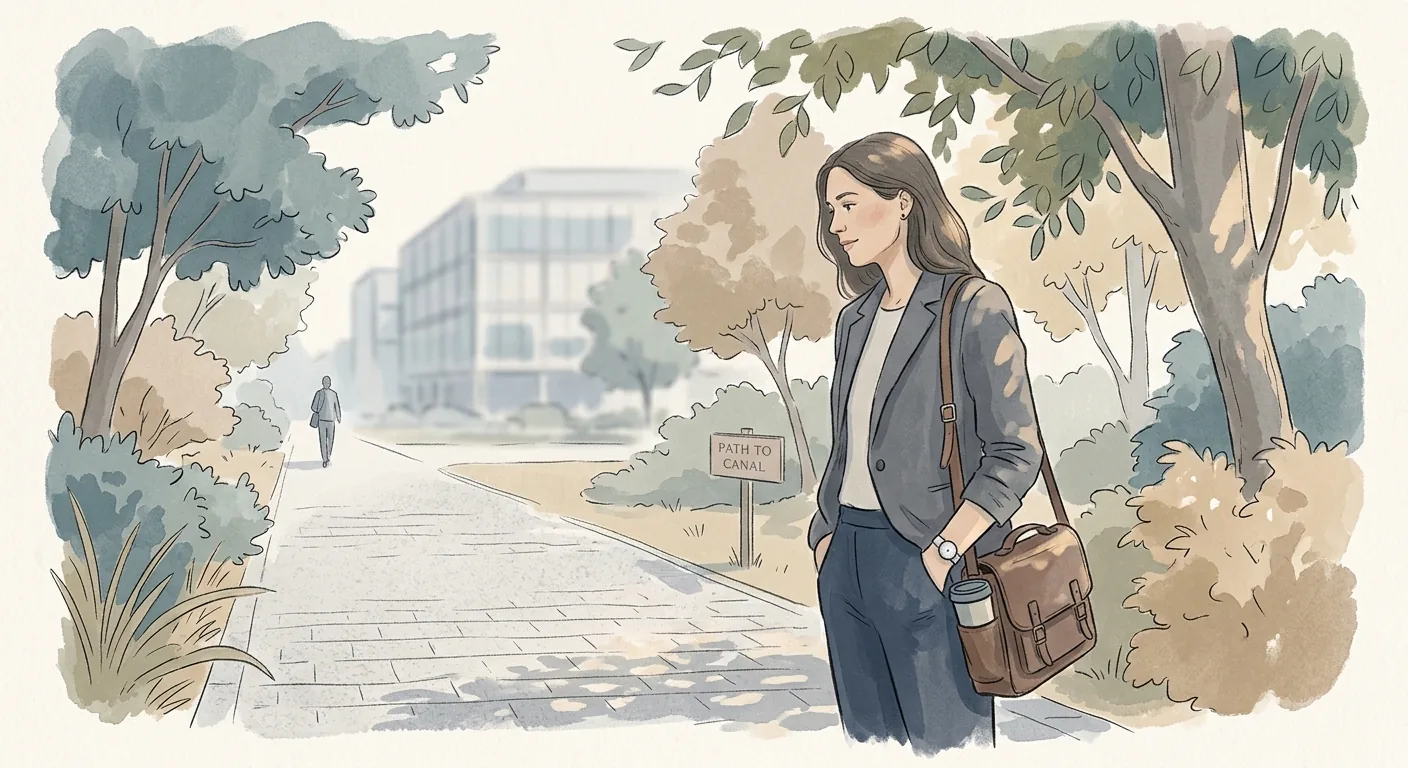
A founder I know walks the same loop around her block between board prep and the rest of the day. Last week, between the morning check on what the AI had drafted and the meeting where she had to explain her pushback on three lines of it, she came back from the loop and noticed she was not actually less tired. She was a little clearer. The tiredness was still there.
What was the loop actually doing?
A study published this April in Frontiers in Psychology asked a near cousin of that question. Jia-Wei Yu and three colleagues surveyed 313 school physical education teachers about their physical activity, their burnout, and two things sitting in between: their mindfulness in daily life and what the researchers called spiritual wellbeing, a steady sense of meaning at work. They wanted to know not just whether more activity meant less burnout, but what was carrying the effect.
The headline was yes, more activity was associated with less burnout. The more interesting answer was how. The buffering effect ran partly through mindfulness as a mediator. Some of it ran through spiritual wellbeing. And a meaningful slice ran through both in sequence: activity opened a brief mindful attention, which fed a steadier sense of meaning, which buffered burnout. The total indirect effect summed across the three pathways was -0.123, small in size but consistent in direction with a much older literature on how the body audits the mind during a break.
"Higher physical activity is associated with lower teacher burnout through both independent and sequential associations involving mindfulness and spiritual wellbeing."
For a leader whose day has come to include more checking, switching, and supervising than it used to, this matters in a specific way. The cognitive surface area of the workday is bigger. The number of micro-decisions about whether to trust, override, or sit with an AI tool’s output is higher. The loop around the block is the same loop. What is doing the buffering inside it may be different work now. This is the same territory we were in when we asked how to audit team AI recovery time as a policy lever, and the same territory we sit in when we ask why a day of supervising AI work feels different from the old kind of tired.
The break does some of its work. The attention the break opens does some of the rest. When AI-mediated work expands the day's cognitive surface area, the mediator inside the break matters more, not less.
The study is cross-sectional, so it cannot establish that physical activity caused the mindfulness or that the mindfulness caused the lower burnout. The authors are careful about this. The sample is one occupational group, one country, with a mean age in the late twenties; mid-career leaders working in AI-mediated knowledge work are an editorial extension, not a measured group. The mediators are self-reported. The indirect effects are small in absolute size. The paper does not measure AI use at all. The honest read is one careful empirical signal sitting inside a much older literature, not a final word.
This week, when you take the break you already take, see if the noticing is part of what is doing the work. Not as an instruction. As a question. After the walk, after the coffee, after the few minutes between meetings, do you come back to the AI work with the same kind of attention as before, or with a slightly different one? It is the same question that sits underneath whether AI productivity gains are really about deployment or about how the day is redesigned. The research is not telling anyone to meditate. It is suggesting that some of what restores a leader is happening at a layer that has not yet been named, and that the noticing of it might be worth more than the prescription.
Sources
- Physical activity and teacher burnout: parallel and serial mediation by mindfulness and spiritual wellbeing - Frontiers in Psychology, 2026-04-08