Three harness moves in 36 hours, and what they did to the Q2 renewal conversation
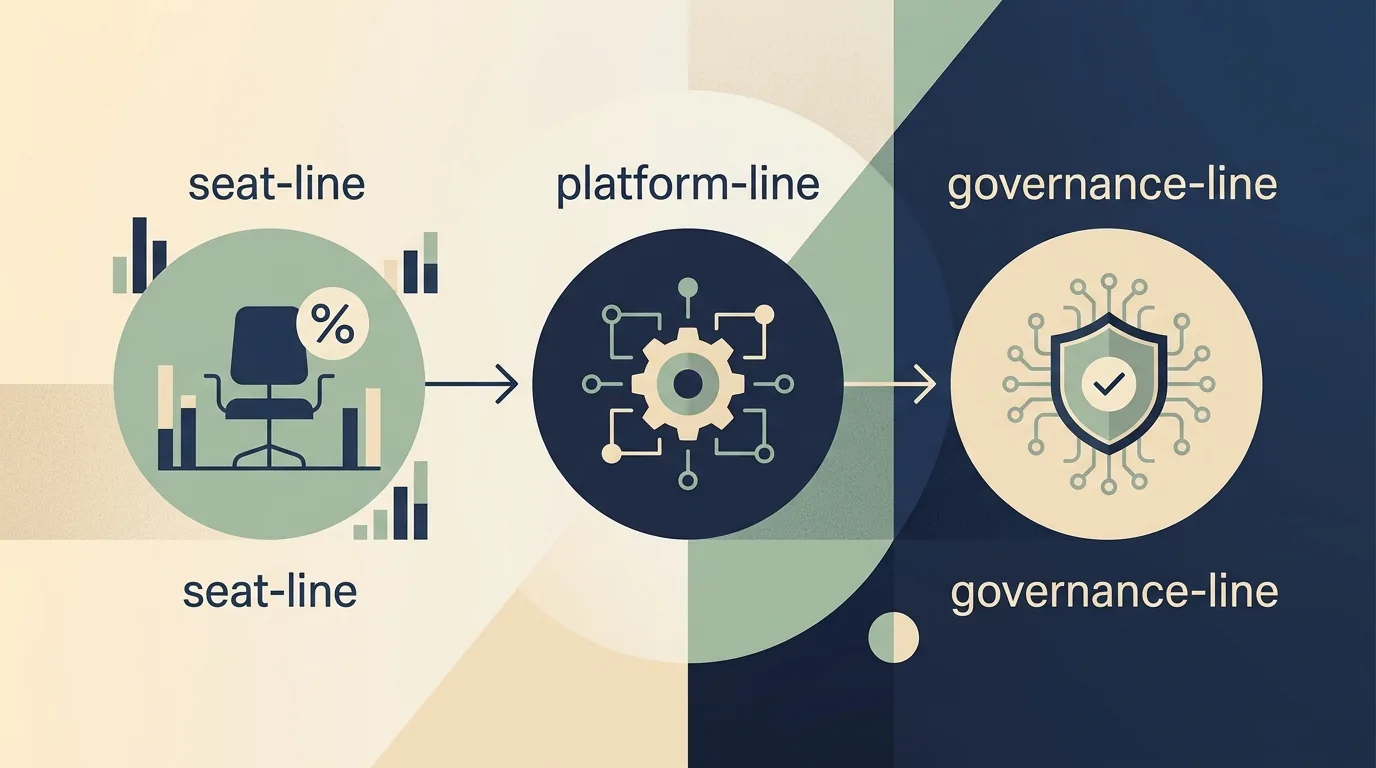
Between Monday morning and Tuesday night, Cursor retired a seat-priced SKU, slid into Microsoft Teams, and GitHub Copilot CLI shipped autopilot and auto-approval. The Q2 renewal conversation an executive walked into this week is not the one they prepared for.
Between Monday afternoon and Tuesday night, three top-tier coding-agent harness vendors shipped changes that quietly reshape the Q2 renewal conversation. Seats are being retired on verifier features, the harness is moving up the stack into the collaboration plane, and read-only operations are being auto-approved by default. None of these are billed as renewal news, and all of them change the math.
I spent Tuesday morning watching three browser tabs refresh, and by the end of the day the spreadsheet I had been about to send a CFO was already wrong. That is a sentence I have said maybe four times this year, and each time it is a harness vendor doing something that looks like a product launch and behaves like a pricing reset.
Here is what happened, and why the renewal slide deck a finance team built three weeks ago is now incomplete.
This week’s signals
Cursor retired the Bugbot seat fee. On May 11, Cursor moved Bugbot from a $40 per seat per month subscription to pure usage-based billing for Teams and Individual plans, with existing customers migrating at their next renewal after June 8. The Cursor blog put numbers on the change: average Bugbot run costs $1.00 to $1.50 depending on PR size, default effort keeps the existing 80 percent bug-resolution-by-merge rate, and a new high-effort setting finds more issues for more spend. This is the first time a top-three harness has openly dismantled its own seat line on a verifier feature.
"Bugbot with high effort finds 35% more bugs while resolution rate stays constant at 80%."
Cursor moved into Microsoft Teams. Same day, Cursor shipped a Teams integration that lets anyone mention @Cursor in a channel, hand off a coding task to a cloud agent, and get a pull request generated without leaving Teams. C-Sharp Corner described it cleanly: the agent picks the repository and model itself, sub-agents work components in parallel, and the Cursor dashboard now unifies Teams, GitHub, and Slack. The harness has quietly moved one floor up from the IDE.
GitHub Copilot CLI shipped autopilot, fork, and read-only auto-approval. Version 1.0.45 went live May 11 with /autopilot and /fork slash commands. Version 1.0.46 followed at 20:53 UTC on May 12 with two updates that matter for governance: a warning that fires when a CLI version is deprecated and “premium model access may be lost,” and auto-approval for read-only gh commands like list, view, status, and diff. The deprecation warning is the in-window tell that GPT-5.3-Codex becomes the base model for every Copilot Business and Enterprise org on May 17, four days after this article publishes.
The thread connecting them
Each of those moves looks small in isolation. Together they say one thing: the line item your finance team is renewing is no longer the line item the vendor is selling.
Seats are being unbundled from the parts of the harness that actually verify code. Verification is moving to consumption pricing because verification is where the model spend lives and vendors want that line to grow with usage, not cap at seat count. At the same time, the harness is moving up the stack. When @Cursor responds inside a Teams channel and opens a PR without anyone touching an IDE, the harness has become a participant in the collaboration plane. The conversation about access control is no longer “who has a license,” it is “who can mention the bot.”
Your harness renewal in Q3 is going to look like three line items: a platform line that holds the seat-equivalent feature set, a metered verifier line that flexes with merged PRs, and a governance line that pays for the control plane. Pricing a harness as a single seat fee is already a back-formation from a contract that does not match the product.
Read-only auto-approval is the third thread. Background agents are practical only when they do not stop to ask permission for every list and view, and every vendor has reached that conclusion within a four-week window. The convenience is real. The audit-trail implication is that your security team needs to confirm those read events still land in your SIEM, because the prompts that used to create them are gone.
Segment lens
For an executive heading into the next board update. The five-line “AI tools” budget item is going to age fast. The boring move this quarter is to ask finance and the CTO to rebuild the harness budget as three sub-lines: platform-equivalent seats, metered verifier and agent runs, and governance plus admin. Then ask which of those three is fixed, which scales with throughput, and which scales with headcount. If the spreadsheet only has one number, the renewal conversation is going to surprise someone in July, and it is better if that someone is not on your board.
For an engineering leader inside the next quarter. Two practical things to lock down before May 17. First, run a quick inventory of where the harness now lives outside the IDE: Teams channels, Slack workspaces, the Microsoft 365 control plane, and any cloud-agent surface that can open a PR. The access policy in those places is suddenly load-bearing. Second, list every read-only operation your harness auto-approves by default, and confirm the audit log is still ingested somewhere a human reads. Cursor, Claude Code, and Copilot CLI are all moving the same direction here, so the question is not which one is risky, it is whether the existing logging keeps up across all of them.
One thing to do
Before the next renewal call, ask the harness vendor for a six-month projected bill at your current PR volume, calculated with both the old seat model and the new metered model. The gap between those two numbers is the new conversation. If the vendor cannot produce that gap, that is also useful information.
Sources
- Updates to Bugbot for Teams and Individuals - Cursor Blog, 2026-05-11
- Cursor is now available in Microsoft Teams - C-Sharp Corner News, 2026-05-11
- GitHub Copilot CLI v1.0.46 release notes - GitHub Releases, 2026-05-12
- GitHub Copilot CLI v1.0.45 release notes - GitHub Releases, 2026-05-11
Written by Kinan Hamwi, Founder of Cerevisor.